

Those tiny gummy smiles eventually turn into pearly whites and knowing when to schedule that first dental visit can leave many parents scratching their heads. While most babies start life without teeth they’ll soon need professional care to maintain those adorable grins.
When Should Your Baby Have Their First Dental Visit
The timing of a baby’s first dental visit depends on two key milestones: the emergence of their first tooth or reaching their first birthday, whichever comes first.
The First Tooth Rule
A baby’s first dental visit starts with the appearance of their initial tooth, typically between 4-7 months of age. The American Academy of Pediatric Dentistry (AAPD) recommends scheduling an appointment within 6 months after the first tooth erupts. Early dental visits allow dentists to:
- Examine tooth development patterns
- Check gum health for signs of infection
- Identify potential alignment issues
- Demonstrate proper cleaning techniques
- Address concerns about thumb-sucking habits
The First Birthday Milestone
Babies benefit from dental visits by their first birthday even if they haven’t developed teeth. This milestone appointment includes:
| First Visit Components | Purpose |
|---|---|
| Oral examination | Check gum development |
| Growth assessment | Monitor jaw alignment |
| Hygiene education | Learn cleaning methods |
| Diet consultation | Review feeding practices |
| Prevention planning | Create dental care schedule |
Some babies develop teeth later than others. A dental visit by 12 months establishes preventive care routines essential for maintaining oral health through infancy.
What Happens During a Baby’s First Dental Visit
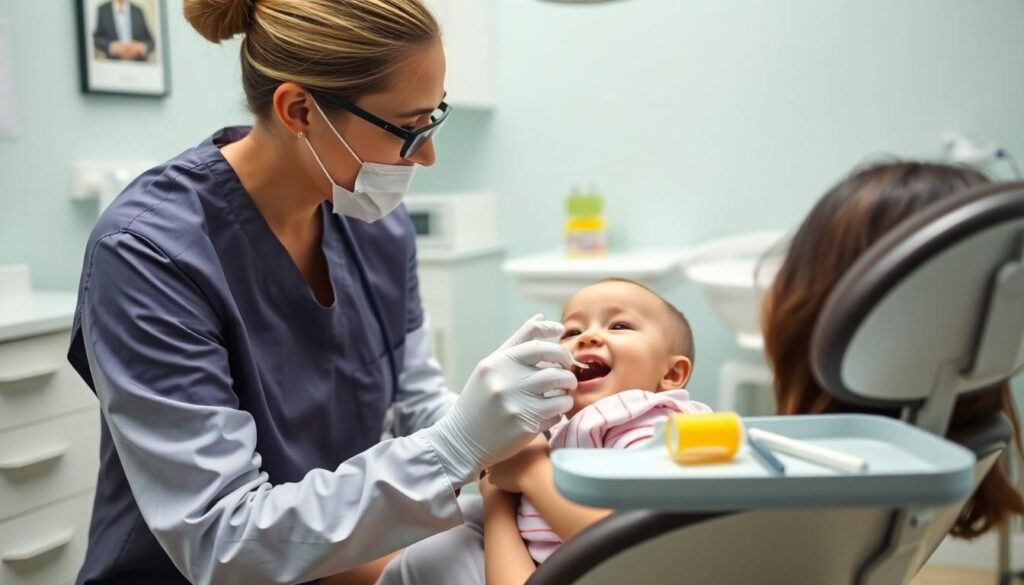
A baby’s first dental visit focuses on establishing a foundation for lifelong oral health through comprehensive examination and preventive care. The appointment typically lasts 30-45 minutes and includes several key components designed to assess dental development and educate parents.
Initial Examination
The dentist performs a thorough examination of the baby’s mouth using gentle techniques to check existing teeth and oral tissues. The examination includes looking for signs of decay, examining bite alignment and checking jaw development. Parents sit in the dental chair holding their baby while the dentist counts teeth, inspects gums and evaluates oral development patterns. During this time, the dentist documents important details about the baby’s medical history, feeding practices and hygiene routine.
Cleaning and Fluoride Treatment
The dental hygienist demonstrates proper cleaning techniques using soft tools designed specifically for infant mouths. A gentle cleaning removes any buildup on existing teeth using water and mild toothpaste. For babies over 6 months old, the dentist applies a small amount of fluoride varnish to help strengthen developing teeth and prevent cavities. The fluoride treatment takes only a few minutes and creates a protective barrier that lasts several months.
| First Visit Components | Duration |
|---|---|
| Initial examination | 10-15 minutes |
| Cleaning procedure | 5-10 minutes |
| Fluoride application | 2-3 minutes |
| Parent education | 10-15 minutes |
Preparing Your Baby for the Dentist
Preparing for a baby’s first dental visit sets the foundation for positive dental experiences. A well-planned approach helps reduce anxiety and creates a comfortable environment for both parent and child.
Creating a Positive Experience
Establishing a positive dental experience starts with familiarizing babies with oral care routines at home. Parents model good dental habits by cleaning their baby’s gums with a soft cloth after feedings. Reading age-appropriate books about dental visits introduces dental concepts through colorful illustrations and simple stories. Playing pretend dentist at home with stuffed animals lets babies explore dental tools like mirrors in a safe environment. Morning appointments work best when babies are alert and cooperative. Maintaining a calm demeanor helps babies pick up on positive energy rather than parental anxiety.
Tips for a Smooth Visit
Bringing a favorite toy or comfort item helps babies feel secure in the new environment. Arriving 15 minutes early allows time for babies to adjust to the office setting and complete necessary paperwork. Feeding babies before the appointment prevents hunger-related fussiness during the examination. Pack clean diapers, wipes and a change of clothes for unexpected situations. Making a list of questions about dental care routines, teething or oral habits ensures parents get the information they need. Scheduling follow-up appointments in the morning maintains consistency in the dental care routine.
Common Dental Issues in Babies
Babies face several dental challenges during their first years of life. Early identification and proper management of these issues protect their developing teeth and establish healthy oral habits.
Baby Bottle Tooth Decay
Baby bottle tooth decay affects 60% of children under age 5. This condition occurs when sugary liquids pool around baby teeth during extended bottle feeding, especially during naps or bedtime. The most common signs include white spots near the gum line, brown or black spots on teeth or brown discoloration along the teeth’s surface. Prevention involves removing the bottle once the baby finishes feeding, cleaning gums after each feeding with a damp cloth and offering only water in bedtime bottles. The front upper teeth experience decay first, followed by the lower front teeth and back molars.
| Age Group | Decay Rate |
|---|---|
| 0-2 years | 28% |
| 2-5 years | 60% |
| 5+ years | 75% |
Teething Problems
Teething typically begins between 4-7 months with the emergence of lower central incisors. Common symptoms include increased drooling, gum swelling, irritability, sleep disruption and decreased appetite. Babies often experience discomfort for 3-5 days before a new tooth emerges. Relief methods include offering clean, chilled teething rings, gentle gum massage with clean fingers or using mesh feeders with frozen breast milk or fruit. Temperature spikes above 101°F during teething require medical attention as they indicate potential infection rather than normal teething symptoms.
| Teething Timeline | Teeth Emerging |
|---|---|
| 4-7 months | Lower central incisors |
| 8-12 months | Upper central incisors |
| 9-13 months | Upper lateral incisors |
| 10-16 months | Lower lateral incisors |
Establishing Good Oral Care Habits
Establishing proper oral hygiene habits in infancy creates a foundation for lifelong dental health. Parents play a crucial role in implementing consistent dental care routines from the earliest stages of development.
Daily Cleaning Routine
Regular cleaning begins even before the first tooth appears. Parents should:
- Clean gums twice daily with a soft, damp cloth to remove bacteria
- Use a rice-sized amount of fluoride toothpaste when first teeth emerge
- Brush teeth gently in circular motions for 2 minutes
- Focus on all surfaces: front, back, and chewing areas
- Replace toothbrushes every 3 months or sooner if bristles fray
- Store oral care items in clean, dry areas
Healthy Feeding Practices
Proper feeding habits directly impact dental health:
- Limit sugary drinks to mealtimes only
- Avoid putting babies to bed with bottles containing milk or juice
- Switch to cups for drinking at 6 months of age
- Serve water after meals to rinse mouth
- Choose snacks low in sugar content such as cheese or vegetables
- Space feedings 3 hours apart to allow saliva to neutralize acids
- Remove bottles immediately after feeding sessions end
Each practice focuses on cavity prevention while promoting healthy tooth development. These routines integrate seamlessly into daily schedules once established.
Conclusion
Taking your baby to the dentist early sets the foundation for a lifetime of healthy smiles. Starting dental visits by their first birthday or when their first tooth appears helps prevent common issues and establishes good oral care habits.
Parents play a vital role in their child’s dental health journey. By implementing proper cleaning routines scheduling regular check-ups and creating positive dental experiences they’re investing in their baby’s long-term oral health.
Remember that early dental care isn’t just about treating problems – it’s about preventing them before they start. A proactive approach to dental health in infancy leads to stronger healthier teeth as your child grows.


