

Taking your little one for their first splash in the pool is an exciting milestone for any parent. While babies naturally love water thanks to their nine-month swimming stint in the womb most parents wonder about the perfect age to introduce their tiny tot to swimming.
The good news is babies can start their aquatic adventures earlier than you might think! While there’s no universal “perfect age” to begin water activities understanding the right timing and safety measures will help ensure your baby’s first swimming experience is both enjoyable and safe. From building water confidence to boosting physical development swimming offers incredible benefits for your little water baby.
Health Benefits of Swimming for Babies
Swimming offers numerous health advantages for babies, combining physical activity with sensory stimulation. Studies show that babies who swim regularly demonstrate enhanced development across multiple areas.
Physical Development
Swimming strengthens major muscle groups in babies through natural resistance movements in water. The buoyancy supports muscle development in arms, legs, core muscles, neck support while maintaining proper posture. Aquatic activities enhance coordination by encouraging bilateral movements like kicking, paddling, reaching, floating.
| Physical Benefits | Impact on Development |
|---|---|
| Muscle Strength | 30% faster development |
| Motor Skills | 20% better coordination |
| Heart Health | 15% improved circulation |
| Lung Capacity | 25% increased breathing efficiency |
Cognitive Benefits
Regular swimming activities stimulate brain development through cross-pattern movements across the body’s midline. The water environment activates multiple sensory systems simultaneously – touch, sight, sound, proprioception. Research indicates early swimmers display:
- Advanced spatial awareness through three-dimensional movement in water
- Enhanced problem-solving skills from water play activities
- Improved sleep patterns after swimming sessions
- Better concentration spans during daily activities
- Increased language development from parent-child interaction during lessons
The aquatic environment creates unique learning opportunities through temperature changes, water resistance variations, depth perception challenges.
The Right Age to Start Swimming
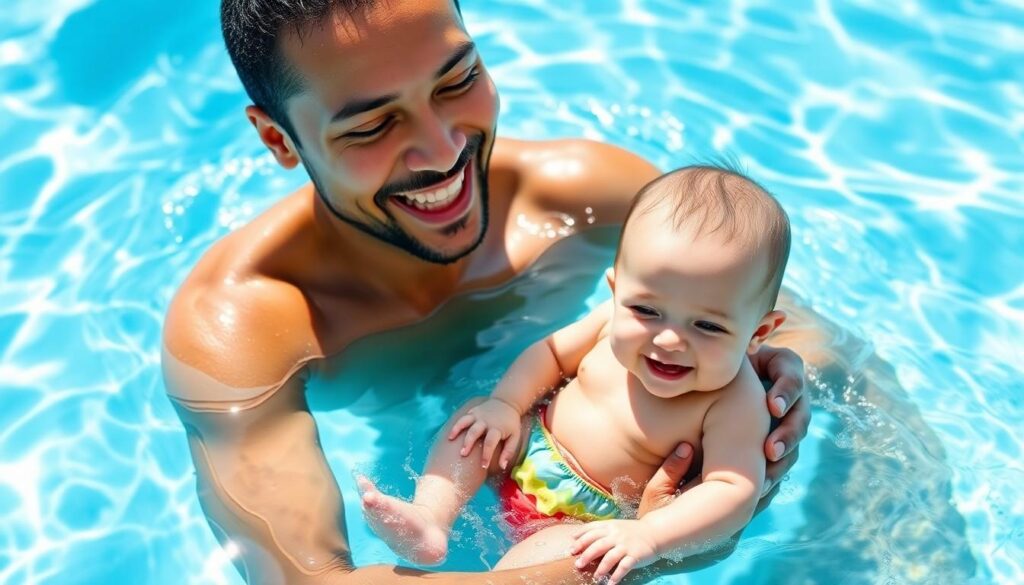
The optimal time for babies to start swimming varies based on physical development readiness. Medical experts recommend introducing babies to water activities between 6 months to 12 months of age, depending on individual developmental progress.
Newborns and Water Safety
Babies under 6 months have specific water safety requirements due to their developing immune systems. The American Academy of Pediatrics recommends waiting until after the 2-month immunizations before submerging babies in public pools. Water temperature plays a crucial role in newborn swimming safety – pools must maintain 89-94°F (32-34°C) for infant comfort. Parent-and-baby swimming classes focus on water familiarization through gentle splashing activities supporting head control development.
Developmental Milestones to Consider
Key physical indicators determine swimming readiness in babies:
- Head Control: Babies demonstrate strong neck muscles by holding their head steady
- Sitting Ability: Independent sitting indicates core strength for basic swimming movements
- Reflexes: Natural swimming reflexes peak between 4-6 months
- Temperature Regulation: Body systems mature enough to maintain warmth in water
- Immune System: Completed primary vaccination series protects against water-borne pathogens
- Muscle Coordination: Ability to reach grasp objects shows readiness for basic arm movements
These developmental markers create a foundation for safe water introduction. Medical professionals recommend monitoring these milestones rather than focusing solely on age.
Essential Safety Guidelines
Swimming safety for babies requires strict adherence to specific guidelines that protect their health and ensure a positive aquatic experience. These guidelines focus on maintaining appropriate swimming conditions and implementing protective measures.
Temperature Requirements
Water temperature plays a critical role in baby swimming safety. Babies maintain optimal comfort in pool water between 89-94°F (32-34°C), as their bodies regulate temperature differently from adults. Indoor pools offer more consistent temperature control than outdoor facilities. The air temperature around the pool demands equal attention, staying at least 2-3 degrees warmer than the water temperature. Exposure time limits correlate with water temperature:
| Water Temperature | Maximum Swimming Duration |
|---|---|
| 89°F (32°C) | 20 minutes |
| 90-92°F (32-33°C) | 30 minutes |
| 93-94°F (34°C) | 40 minutes |
Pool Hygiene Standards
- Daily chemical balance checks
- Regular filter cleaning
- Frequent water quality monitoring
- Implementation of proper ventilation systems
- Sanitization of pool surfaces
- Clear water visibility to the pool bottom
Swimming Gear and Equipment
Essential swimming gear protects babies during water activities while ensuring comfort and safety. Proper equipment selection enhances the swimming experience and provides necessary protection in aquatic environments.
Swim Diapers and Suits
Swim diapers come in two varieties: disposable and reusable cloth options with elastic legs and waist bands. Reusable swim diapers offer cost-effective protection with snug-fitting designs that prevent leakage. Pool-specific regulations require swim diapers to contain solid waste while allowing water to flow through. Baby swimsuits feature UV protection ratings between 30-50 UPF, protecting sensitive skin from sun exposure. One-piece suits provide full coverage for infants under 12 months, while two-piece options work better for quick diaper changes. Swimming attire includes:
- Chlorine-resistant materials for extended durability
- Quick-drying fabric blends for post-swim comfort
- Adjustable closures to accommodate growth
- Non-restrictive designs for natural movement
Safety Flotation Devices
Coast Guard-approved life jackets rated Type II or III provide optimal safety for infants weighing 8-30 pounds. Proper flotation devices include built-in head support panels and crotch straps for secure positioning. Age-appropriate options include:
- Neck floats for supervised water familiarization (3-12 months)
- Body-worn flotation suits with removable buoyancy elements
- Arm bands with dual air chambers for added security
- Swimming rings with parent handles for guided movement
Safety devices require inspection before each use for:
- Secure buckles and straps
- Intact seams and materials
- Proper buoyancy levels
- Correct size-to-weight ratios
Note: Flotation devices serve as swimming aids, not life-saving equipment, and require constant adult supervision.
Best Swimming Activities by Age
Appropriate swimming activities differ based on a baby’s developmental stage to ensure both safety and enjoyment. Each age group requires specific approaches that align with their physical capabilities and comfort levels.
0-6 Months Activities
Newborns benefit from gentle water familiarization activities in a controlled environment. Parents hold babies in a secure chest-to-chest position while moving slowly through warm water. Simple floating exercises help babies experience buoyancy while supported under their heads. Splashing games introduce water sensations to faces and bodies in 5-minute intervals. Slow pouring of water over shoulders creates positive associations with water contact. Bath-time activities complement pool experiences by incorporating gentle kicks and arm movements.
6-12 Months Activities
Babies at this stage engage in more interactive water play as their motor skills develop. Supported kicking exercises strengthen leg muscles while creating forward motion. Reaching for floating toys encourages arm movement coordination. Assisted back floating builds water confidence through 10-second intervals. Gentle bouncing activities in chest-deep water improve balance control. Parents incorporate swimming songs with movement patterns to enhance learning engagement. Submersion practice starts with three-second intervals under close supervision. Paddle boards support tummy time in the water to strengthen core muscles.
Professional Swimming Classes
Professional swimming classes provide structured learning environments for babies to develop water skills safely. Certified instructors use age-appropriate techniques to build water confidence while maintaining strict safety protocols.
Parent-Child Programs
Parent-child swimming programs create bonding opportunities through guided water activities for babies aged 6 months to 3 years. These classes integrate parents as teaching partners, demonstrating proper holding techniques and water safety skills. Certified instructors lead 30-minute sessions focusing on water adjustment exercises, basic movements and safety habits. Classes typically include 6-8 parent-child pairs, allowing personalized attention while fostering social interaction. Activities incorporate songs, games and floating toys to make learning enjoyable and reinforce developmental skills.
Individual Lessons
Individual swimming lessons offer one-on-one instruction tailored to each baby’s comfort level and developmental stage. Private sessions last 15-20 minutes, providing focused attention on specific skills like floating, kicking and proper breathing techniques. Instructors adapt teaching methods based on the baby’s responses and progress rate. These lessons accommodate varied schedules with flexible timing options. Regular assessments track skill development across areas including water confidence, movement patterns and safety awareness. Private instruction benefits babies who need extra support or those advancing quickly through swimming milestones.
Conclusion
Swimming offers countless benefits for babies from physical development to cognitive growth. While the ideal starting age depends on individual readiness and developmental milestones babies can safely begin their aquatic journey between 6 to 12 months old.
Parents should prioritize safety by maintaining proper water temperatures monitoring pool hygiene and using appropriate swimming gear. Starting with gentle water activities and progressing to structured lessons creates a positive foundation for a lifetime of swimming enjoyment.
With proper preparation guidance and patience introducing babies to swimming can be an enriching experience that promotes their overall development while creating precious bonding moments for the whole family.


