
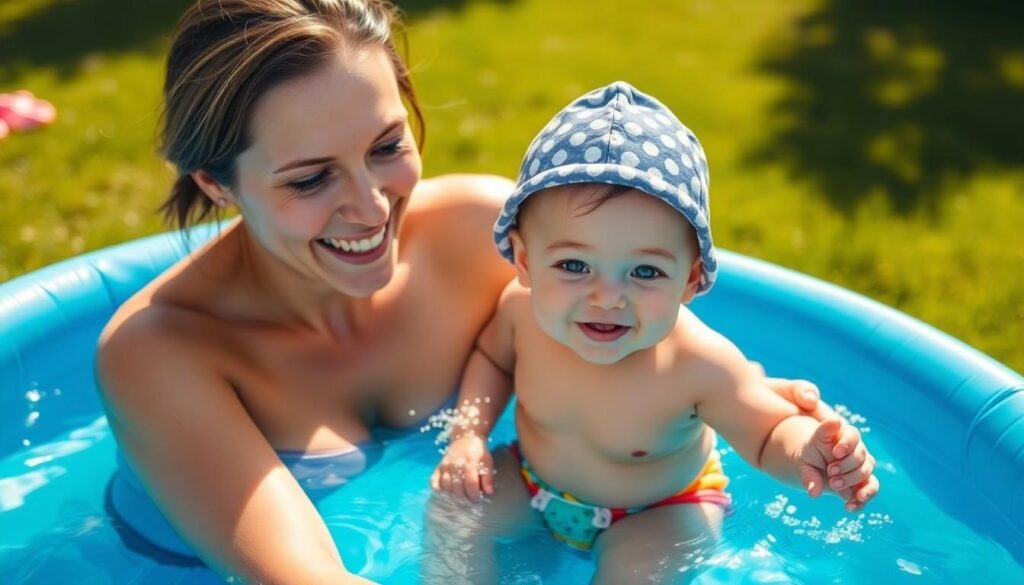
Taking a splash with your little one can be an exciting milestone but knowing when to introduce your baby to the pool requires careful consideration. Many parents wonder about the perfect age to start their infant’s aquatic adventures while ensuring their safety and health.
The American Academy of Pediatrics suggests that babies can safely enjoy pool time at different ages depending on several factors including immunization status physical development and overall health. While some parents can’t wait to share their love of swimming introducing babies to pools too early might pose unnecessary risks. Finding the right balance between safety and fun is key to creating positive water experiences for your little swimmer.
When Can Babies Safely Start Swimming
The right age for babies to start swimming varies based on physical development milestones, immunization status and parental readiness. Safe pool introduction requires careful consideration of several key factors to protect infants’ health and safety.
Age Guidelines for Pool Safety
Babies aged 6 months or older demonstrate sufficient neck strength and coordination for basic water activities. Organized swim lessons become appropriate at 12 months when infants develop better motor control and can follow simple instructions. The Centers for Disease Control (CDC) recommends waiting until after the 2-month vaccination series before any pool exposure.
| Age | Safety Milestone |
|---|---|
| 2-6 months | Complete initial vaccinations |
| 6-12 months | Develop neck/head control |
| 12+ months | Ready for swim lessons |
Medical Expert Recommendations
The American Academy of Pediatrics (AAP) endorses parent-child water activities at 6 months with proper safety measures in place. Pediatricians emphasize maintaining water temperatures between 85-87°F for infant swimming. The World Aquatic Babies & Children Network suggests starting with 10-minute sessions in chlorinated pools that maintain pH levels between 7.2-7.6.
| Expert Organization | Key Recommendation |
|---|---|
| AAP | Start at 6 months |
| CDC | Post-vaccination entry |
| WHO | 85-87°F water temp |
Essential Safety Precautions for Baby Swimming
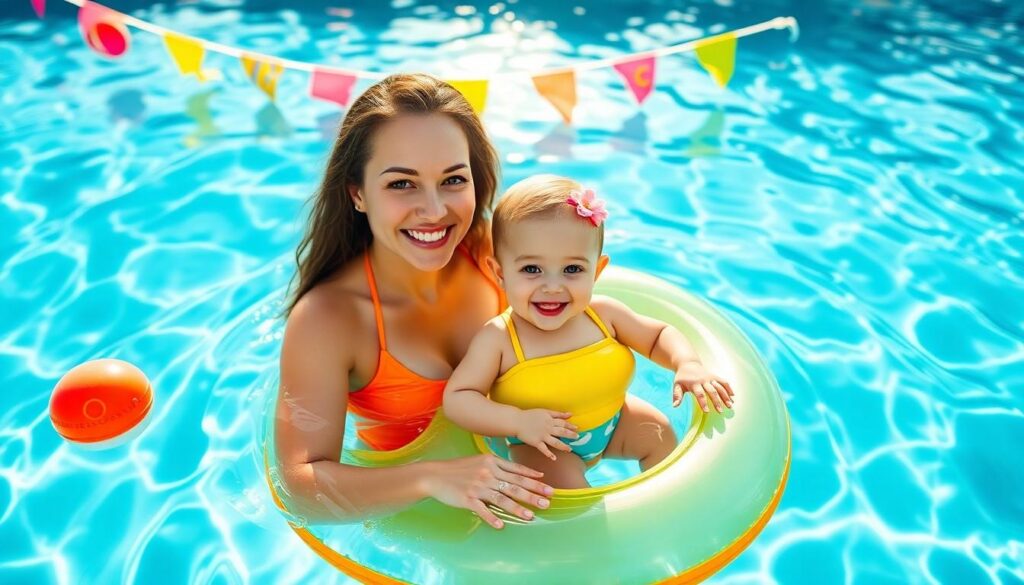
Swimming safety measures protect infants from water-related risks during pool activities. The right equipment, temperature control, and vigilant supervision create a secure environment for baby’s first water experiences.
Proper Swim Diapers and Gear
Swim diapers feature snug elastic bands around the legs and waist to prevent leakage. Babies need specialized reusable swim diapers with waterproof outer layers or disposable versions designed for pool use. Essential swimming gear includes:
- UV-protective swimwear with UPF 50+ rating
- Fitted swim caps to maintain body temperature
- Non-slip water shoes for pool deck safety
- Coast Guard-approved life jackets for added protection
- Silicone or neoprene neck floats for supported swimming
Water Temperature Requirements
Pool temperature impacts a baby’s comfort and safety during swimming sessions. The ideal water temperature ranges align with specific age groups:
| Age Group | Temperature Range (°F) |
|---|---|
| 0-3 months | 90-92°F |
| 3-6 months | 88-90°F |
| 6+ months | 85-87°F |
Signs of temperature discomfort include:
- Shivering or goosebumps
- Blue-tinted lips or fingernails
- Irritability or crying
- Muscle cramping
- Decreased activity level
The pool area temperature stays 2-4 degrees warmer than the water temperature to prevent heat loss during transitions.
Health Considerations Before Pool Time
Medical readiness plays a crucial role in determining when babies can safely enter pools. Parents must evaluate specific health factors to protect their infants during water activities.
Vaccination Schedule Check
Babies require completion of their initial vaccination series before pool exposure. The CDC recommends waiting until after the 2-month vaccines which include DTaP, IPV, Hib, HepB, PCV13 RV. A comprehensive vaccination schedule includes:
| Age | Required Vaccines |
|---|---|
| 2 months | DTaP, IPV, Hib, HepB, PCV13, RV |
| 4 months | DTaP, IPV, Hib, PCV13, RV |
| 6 months | DTaP, IPV, Hib, HepB, PCV13, RV, Flu |
Parents confirm vaccination status with pediatricians before starting pool activities to ensure immune system protection against waterborne illnesses.
Skin and Eye Protection
Babies’ sensitive skin requires specific protection measures in chlorinated pools. UV-protective swimwear with UPF 50+ blocks harmful sun rays while waterproof sunscreen (SPF 30+) guards exposed skin areas. Essential pool protection includes:
- Swim goggles protect eyes from chlorine irritation
- Fitted swim caps cover delicate scalps
- Rash guards shield torso from sun exposure
- Water shoes prevent slipping on wet surfaces
- Swimming diapers contain waste effectively
Regular skin checks during pool sessions identify early signs of irritation such as redness dryness or rashes. Immediate rinsing with fresh water after swimming removes chemical residue from skin surfaces.
Teaching Water Familiarity to Infants
Early water exposure helps infants develop aquatic readiness through structured activities and guided play. Professional instruction combined with parental involvement creates a foundation for water confidence and basic swimming skills.
Parent-Baby Swimming Classes
Parent-baby swimming classes introduce essential water safety skills through structured activities in a controlled environment. Professional instructors teach parents proper holding techniques while demonstrating safe water entry methods. These classes incorporate age-appropriate exercises like gentle bouncing movements underwater bubbles exposure. The American Red Cross recommends 30-minute sessions for optimal engagement without overtiring infants. Classes focus on three core elements:
- Back floating with parental support
- Face submersion practice with verbal cues
- Leg kicking exercises at the pool wall
Water Play Activities
Engaging water activities strengthen infant motor skills while building confidence in aquatic environments. Simple games include:
- Pouring water from cups to demonstrate water flow
- Floating colorful toys for reaching practice
- Singing water-themed songs during movement exercises
- Blowing bubbles to encourage breath control
| Activity Type | Skill Development | Duration |
|---|---|---|
| Splashing | Motor Control | 5 minutes |
| Float Games | Balance | 3 minutes |
| Water Songs | Coordination | 4 minutes |
| Cup Play | Hand-Eye Skills | 3 minutes |
Common Signs Your Baby is Ready for the Pool
Physical development indicators signal a baby’s readiness for pool activities:
- Holds head up consistently during tummy time
- Sits independently without support
- Shows strong neck muscle control
- Maintains steady eye contact
- Reaches for objects with coordinated movements
- Responds to simple verbal cues
Behavioral readiness appears through these responses:
- Displays curiosity about water during bath time
- Splashes playfully in shallow water
- Shows excitement near water features
- Tolerates water on face without distress
- Demonstrates comfort in different positions
- Maintains alertness during water exposure
Health markers confirm pool preparedness:
| Health Requirement | Age/Status |
|---|---|
| Initial vaccinations | Complete 2-month series |
| Core temperature regulation | Stable body temperature |
| Immune system development | Post 6-month milestone |
| Skin sensitivity | No rashes or irritations |
| Ear infection history | Clear for 2 weeks |
Emotional cues indicate swimming readiness:
- Remains calm in new environments
- Shows interest in parent-led activities
- Maintains regular sleep patterns
- Exhibits consistent feeding routines
- Demonstrates social engagement
- Adapts to temperature changes
- Grasps toys with intention
- Follows moving objects with eyes
- Responds to name consistently
- Shows awareness of surroundings
- Maintains regular wake periods
- Demonstrates improved balance
Conclusion
Taking babies to the pool can be a rewarding experience when done safely and at the right time. Parents should wait until their little ones are at least 6 months old and fully vaccinated before starting water activities. Maintaining proper safety measures including appropriate swim gear water temperature and constant supervision creates an environment where babies can thrive.
By following expert guidelines and watching for readiness signs parents can help their infants develop water confidence and essential swimming skills. With the right preparation swimming becomes not just a safety skill but an enjoyable bonding activity that supports physical development and creates lasting memories.


